
Critical Loads Panel Explained
Updated 2026-08-16 · 5 min read
Gear this guide recommends
We earn a commission if you buy through links on this page, at no extra cost to you. It does not change what we recommend. See our affiliate disclosure. As an Amazon Associate I earn from qualifying purchases.
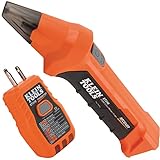
Circuit breaker finder
Klein Tools ET310
Best for: Labeling a panel without two people and a lot of shouting
Jump to a section▾
A critical loads panel is the practical mechanism that makes battery backup affordable. Rather than sizing a system to run your whole house, you decide what genuinely matters and back up only that.
What is a critical loads panel?
A subpanel containing selected circuits. During normal operation it's fed from the main panel like any subpanel. During an outage, the backup system's transfer equipment isolates it from the grid and feeds it from the battery.
Everything not in that panel stays dark.
The point: battery capacity and power output only need to cover the circuits inside it. See essential loads vs whole-home battery backup.
What belongs in it
The usual list:
| Circuit | Why |
|---|---|
| Refrigerator and freezer | Food spoilage is the most common outage cost |
| Selected lighting | A few circuits, not every room |
| Internet, router, modem | Trivial load, high value |
| Heating controls and blower | Essential in winter; modest load |
| Well pump | No water without it; high surge |
| Sump pump | Flooding risk; high surge |
| Medical equipment | First priority, always |
| A few receptacles | Device charging, small appliances |
| Garage door opener | Occasionally worth it |
Usually excluded on purpose:
- Electric resistance heat
- Central air conditioning
- Electric water heating
- Electric range and oven
- EV charging
- Pool equipment
- Most lighting circuits
Those exclusions are what keep the battery sized sensibly. Work out the numbers with the home electrical load calculator and the appliance wattage reference.
Don't forget surge
Capacity determines how long; power output and surge determine what can start.
Well pumps and sump pumps draw a large surge at startup that the battery inverter must supply. A system that comfortably runs your refrigerator may still fail to start a well pump.
If pumps are in your critical loads, check the surge rating explicitly, not just continuous power. Same consideration as starting watts vs running watts for generators.
How it's wired
Straightforward in principle:
- A subpanel is installed near the main panel
- Selected circuits are physically moved from the main panel into it
- The subpanel is fed through the backup system's transfer equipment
- Normally it's fed from the grid via the main panel; during an outage, from the battery
Practical implications:
Moving circuits is real electrical work. Conductors must reach the new panel, which sometimes requires extensions or junction boxes, and every splice needs an accessible box. See junction boxes explained.
Some circuits are awkward to move, depending on where they run.
Space is needed near the main panel for the subpanel, with code working clearance maintained. See electrical panel working clearance requirements.
It's permitted, inspected work. See home battery installation requirements.
The flexibility problem
The main drawback: changing your mind means an electrician.
Decide six months later that you want the office circuit backed up, and someone has to physically move it. Same if your needs change: a new medical device, a different work pattern, a heat pump replacing a gas furnace.
That inflexibility is the strongest argument for the alternative.
The smart panel alternative
A smart panel replaces the main panel with one that has per-circuit monitoring and control. During an outage it can back up the entire panel while automatically shedding large loads.
Advantages over a critical loads subpanel:
- No circuits to physically move
- Priorities change in software, not with a service call
- Dynamic shedding as available energy declines: it can drop more loads as the battery depletes
- Whole-home convenience without whole-home capacity
- Monitoring you get anyway
Costs: a more expensive panel, and replacing the main panel is a larger job than adding a subpanel.
Worth strongly considering if your main panel needs replacing anyway, or if your load priorities are likely to change. See smart electrical panels explained and load management for home electrification.
Choosing what goes in
A useful exercise: imagine a three-day outage in the worst season and ask what you'd genuinely need.
Most households conclude:
- Keep food cold: refrigerator and freezer
- Stay warm or cool enough: heating controls at minimum
- Keep water working: well or sump pump if applicable
- Stay connected: internet and device charging
- See: a few lights
That's a modest load, and a modest battery covers it, especially with solar recharging during the day. See solar plus battery backup design.
Then ask what you'd like but could live without, and price whether including it is worth the capacity.
Labeling matters
Once installed, label both panels clearly: which circuits are backed up and which aren't. During an outage, in the dark, that information is genuinely useful, and it matters for anyone working on the system later.
See how to label an electrical panel.
The bottom line
A critical loads panel is a subpanel holding the circuits that stay energized during an outage, which lets a modest battery do useful work instead of requiring whole-home capacity. Put refrigeration, some lighting, internet, heating controls and pumps in it; deliberately leave out electric heat, air conditioning, water heating and EV charging. Check surge ratings if pumps are included, and consider a smart panel instead if your priorities may change, because moving circuits later means an electrician.
Work out your loads with the home electrical load calculator, size storage with the home battery sizing calculator, or read essential loads vs whole-home battery backup.
Frequently asked questions
Ask AI about this
Open an AI assistant with a question grounded in this page.