
How to Label an Electrical Panel Correctly
Updated 2026-08-16 · 6 min read
Gear this guide recommends
We earn a commission if you buy through links on this page, at no extra cost to you. It does not change what we recommend. See our affiliate disclosure. As an Amazon Associate I earn from qualifying purchases.
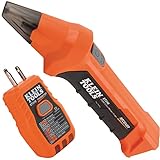
Circuit breaker finder
Klein Tools ET310
Best for: Labeling a panel without two people and a lot of shouting
Jump to a section▾
An accurate panel directory is the highest-value hour you can spend on your home's electrical system. It costs nothing, requires no tools beyond a radio, and it's the difference between killing a circuit in ten seconds during an emergency and flipping every breaker in the box.
Most homes don't have one. The card is missing, or it's in faded pencil from 1987, or it says "bedroom" three times.
What the directory has to say
| Instead of | Write |
|---|---|
| "Bedroom" | "NE bedroom: outlets + ceiling light" |
| "Kitchen" | "Kitchen counter, north wall (SABC 1)" |
| "Lights" | "Upstairs hall + stairwell lights" |
| "Spare" | "Spare: not connected" |
| Blank | Anything true |
The NEC requires each circuit's purpose to be described specifically enough to identify it, and "bedroom" fails that in any house with more than one. Describe the load and the location, and mark spares explicitly so nobody has to test them again.
What does the code require?
The NEC requires the circuit directory to identify each circuit's clear, evident, and specific purpose, legibly, at the panel. Two consequences worth knowing:
- "Misc" and "lights" are not compliant. They don't identify a specific purpose.
- Identification must not depend on who currently lives there. "Sarah's room" fails when Sarah moves out; "northeast bedroom" doesn't.
Spare circuits should be marked as spare, and unused positions should be identified as such rather than left blank.
What you need
- A loud radio or a plug-in outlet tester with an audible alarm
- A pencil and paper for the rough map, before anything goes on the card
- A helper, or a circuit breaker finder if you're alone
- A phone, for photographing the finished directory
The method
1. Draw a rough floor plan
Sketch each floor and mark every receptacle, light fixture, and hardwired appliance. It doesn't need to be to scale: it needs to be complete. Number the items so you can note breaker numbers against them.
2. Number the breakers
Panels usually number odd on the left, even on the right, top to bottom. If yours has printed numbers, use those. If not, write your own numbers on masking tape beside each breaker so your notes and the panel agree.
3. Turn everything on
Every light, and a radio or tester in every receptacle you can reach. The more that's on, the more each breaker tells you when it goes off.
4. Work one breaker at a time
Turn a single breaker OFF. Walk the house and record everything that died. Turn it back ON. Move to the next.
This is the slow part and there's no shortcut for a house with 30 circuits: budget two to three hours. Do it with a helper on the phone, or use a breaker finder: leave the transmitter plugged into an outlet, and the receiver at the panel identifies the breaker without anyone walking anywhere. It turns an afternoon into an hour, and the tool doubles as an outlet tester.
5. Handle the hardwired loads
Furnace, air handler, water heater, dishwasher, disposal, well pump, sump pump, garage door opener, and the AC or heat pump condenser are all on breakers, usually dedicated ones. Identify each one specifically: these are exactly the circuits someone will need to kill in a hurry.
Take special care with the furnace or air handler: label it clearly, because a service technician will look for it and because turning it off by accident in January is memorable.
6. Write the directory
Now transfer the map to the card. Good labels:
1: Northeast bedroom, lights + receptacles3: Kitchen counter receptacles, south wall5: Dishwasher7: Furnace / air handler9: Garage receptacles + door opener11: Water heater (240V)13: Spare
Print, don't cursive. Use a pen that won't fade. If the card is too small (and it usually is) write a full directory on paper, photograph it, and tape a printed copy inside the door.
7. Photograph it
Keep a photo on your phone. It's the version you'll actually have when you need it, and it survives the card falling off.
Things that will confuse you
One outlet dead, rest of the room fine. Likely a GFCI downstream of another receptacle. Find the GFCI with the RESET button (often in a bathroom or garage) and check whether it's tripped. See GFCI vs AFCI.
Half an outlet works. Switched receptacle: one half is controlled by a wall switch. Note it on the directory.
Two breakers seem to control the same thing. Possibly a multi-wire branch circuit sharing a neutral, which should have handle-tied breakers. Worth noting for an electrician.
A breaker does nothing. Could be a genuine spare, or it could feed something you didn't check: an outdoor receptacle, an attic light, a crawl-space outlet, a doorbell transformer. Check the exterior and unfinished spaces before writing "spare".
While you're at it
Two things worth checking during the same session:
- Working clearance. The NEC requires the space in front of the panel to be kept clear. Anything stacked there should move. See electrical panel working clearance requirements.
- Warning signs. Heat through the cover, a burning smell, rust, or buzzing all justify a call. See signs your electrical panel is failing.
Code reference
The requirements behind this guide, for looking up in your adopted edition:
- NEC 408.4(A): circuit directory, requiring each circuit’s purpose to be described specifically
Code editions and local amendments vary by jurisdiction. Confirm the adopted edition with your AHJ before relying on any specific article.
Doing step 4 without a helper
Step 4 is the two-to-three-hour part, and a breaker finder is what removes the walking from it: transmitter in the outlet, receiver at the panel. The reference unit in that class, with the outlet tester built into the transmitter so you get the wiring check in the same pass:
We earn a commission if you buy through links on this page, at no extra cost to you. It does not change what we recommend. See our affiliate disclosure. As an Amazon Associate I earn from qualifying purchases.
Circuit breaker finder
Klein Tools ET310
Transmitter-and-receiver pair that maps an outlet to its breaker, with a receptacle tester built into the transmitter.
Best for: Labeling a panel without two people and a lot of shouting
- Method
- Plug-in transmitter + handheld receiver
- Extras
- Built-in GFCI receptacle tester
- Operation
- Auto-learning: scan the panel once to learn it, then again to find the breaker
- Voltage
- 90–120 V AC circuits only
- Turns panel labeling from an afternoon into an hour
- Doubles as a receptacle tester, so it replaces a tool rather than adding one
- 120 V circuits only: it won't trace a 240 V breaker
- Tight, densely packed panels still take patience: follow the learn-then-scan sequence exactly
More options in every size are in the electrical tester picks.
Where to go next
- How to read your electrical panel
- How to find which breaker controls an outlet
- Tools for the job: best electrical testers
- Appliance wattage chart
More in our electrical panel guides.
Frequently asked questions
Ask AI about this
Open an AI assistant with a question grounded in this page.