
Generator Electrical Requirements
Updated 2026-08-16 · 5 min read
Gear this guide recommends
We earn a commission if you buy through links on this page, at no extra cost to you. It does not change what we recommend. See our affiliate disclosure. As an Amazon Associate I earn from qualifying purchases.
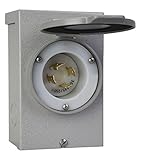
Power inlet box
Reliance Controls PB30 Power Inlet Box (30 A, L14-30)
Best for: Interlock-kit and transfer-switch installs fed by a portable generator's L14-30 outlet

Generator power cord
WEN PC3025 30-Amp Generator Power Cord, 25 ft (L14-30P to L14-30R)
Best for: Connecting an L14-30 generator to a house inlet from 20 feet or more away
Jump to a section▾
The electrical side of a generator installation is ordinary feeder work with a few generator-specific requirements layered on. Here's what it involves.
Connection requirements
| Item | Requirement |
|---|---|
| Inlet box | Weatherproof, rated for the generator's plug |
| Transfer equipment | Interlock kit or transfer switch: never neither |
| Feeder to the panel | Sized to the generator's output |
| Neutral bonding | Bonded vs floating must match the transfer method |
| Grounding | Per NEC and the manufacturer |
| Permit and inspection | Required in most jurisdictions |
| GFCI on generator outlets | Built into most modern units |
| Cord | Rated for the load and length |
The item most often got wrong is neutral bonding. A generator with a bonded neutral feeding a system through a switch that does not switch the neutral creates a second bond: the same defect as a bonded subpanel. Match the generator's bonding to the transfer equipment.
Conductor sizing
The feeder from the inlet box or generator to the transfer equipment is sized like any other feeder:
- Determine the current from the generator's output rating
- Select conductors with adequate ampacity, applying derating for ambient temperature and conductor count
- Check voltage drop over the run: a generator sited 30+ feet from the house for CO safety plus a run to the panel adds up
- Protect with an appropriately rated overcurrent device
See what size breaker do I need and the wire and breaker size chart.
Note that generator connections are frequently outdoors and underground, which brings additional requirements: conductors rated for wet locations, burial depth, and conduit where required.
Overcurrent protection
The generator breaker in the panel, sized to the feeder and the generator output, occupying two adjacent positions for a 240 V connection.
The generator's own output protection, built into most units.
The transfer switch rating, which must suit both the service and the generator side.
For an interlock installation, the generator breaker is a normal panel breaker with the interlock plate preventing simultaneous operation with the main. It needs two adjacent free positions. See how many circuits can a panel hold.
Grounding and bonding
The requirement that most often goes wrong.
Exactly one neutral-to-ground bond must exist in the system. Whether the generator provides it depends on whether the transfer equipment switches the neutral:
- Neutral not switched (most interlocks, many transfer switches) → the service bond remains in circuit → generator should be floating
- Neutral switched (3-pole transfer switch) → the service bond is disconnected → generator must be bonded
Two bonds put normal return current on grounding conductors and metal parts. No bond means faults may not clear.
See generator neutral bonding and grounding vs bonding.
Permanently installed generators may also require their own grounding electrode connection, depending on the installation and whether they're a separately derived system.
Disconnecting means
Standby generators generally require a disconnecting means, and where the generator is remote from the transfer equipment, a local disconnect at the generator is typically required, so a technician can isolate it before working on it.
Portable generators connected through an inlet box are disconnected by unplugging the cord and by the interlock or transfer switch.
Labeling
Required and frequently missed:
At the service equipment, identification that an alternate power source is present. Anyone working on the system (an electrician, a utility crew, a firefighter) needs to know a generator can energize it.
At the transfer switch, clear indication of the utility and generator positions.
Circuit directory updated to reflect the generator breaker and, for a subpanel switch, which circuits are backed up. See how to label an electrical panel.
The inlet box and cord
For portable generator connections:
- Inlet rated for the current and matched to the generator's receptacle configuration
- Weatherproof enclosure, suitable for the location
- Feeder from the inlet to the transfer equipment, sized and protected
- Cord matched at both ends, rated for the current, sized for its length
See generator inlet box and the NEMA plug chart.
Subpanel rules still apply
Where a transfer switch feeds a subpanel of selected circuits, standard subpanel requirements apply:
- Neutrals isolated from the enclosure
- Grounds on a separate bonded bar
- Four-wire feeder: two energized conductors, neutral, and a separate equipment grounding conductor
See what is a subpanel.
Why is this electrician work?
Every item above sits inside or adjacent to service equipment, where the main lugs remain energized with the main breaker off. There's no homeowner-accessible way to de-energize them.
It's also permitted, inspected work in essentially every jurisdiction, and the neutral bonding decision in particular is not something you can determine by looking at the outside of a transfer switch.
See generator permits and inspection and electrical work homeowners can legally do.
Standards and code reference
The standards behind this guide, for looking up in the edition your jurisdiction has adopted:
- NEC Article 445: generators
- NEC Article 702: optional standby systems
- NEC 250.34 / 250.35: grounding and bonding of portable and permanent generators
Code editions and local amendments vary. Confirm the adopted edition with your AHJ, and treat manufacturer instructions as governing wherever they are more restrictive.
Where to go next
More in our generator and backup power guides.
Frequently asked questions
Ask AI about this
Open an AI assistant with a question grounded in this page.