Skip to content

Generator Safety Gear: CO Alarms, Cords, Transfer Switches & Inlets

We earn a commission if you buy through links on this page, at no extra cost to you. It does not change what we recommend. See our affiliate disclosure. As an Amazon Associate I earn from qualifying purchases.

Running a generator through an outage brings three avoidable hazards: carbon monoxide from a generator too close to the house, cords that can't carry the load, and generators plugged into a wall outlet to backfeed the house wiring. Each has a specific fix, and this page is those fixes plus the parts that finish a safe hookup, nothing else.

CPSC's guidance is short: run a portable generator outside only, at least 20 feet from the house with the exhaust pointed away; put battery-operated or battery-backup CO alarms on every level and outside sleeping areas, and test them monthly; use heavy-duty, outdoor-rated cords rated for more watts than everything plugged into them; and never plug a generator into a wall outlet. The products below are the hardware for those four rules.

A transfer switch or interlock kit also needs the outside half of the connection: a listed inlet box on the wall and a 30 A cord long enough to keep the generator 20 feet out; a 10-foot kit cord is not. A floating-neutral generator taken off the house to run on cords may need a neutral-ground bonding plug, which must come out before the generator goes back on the house inlet. And because stale gasoline is the most common reason a generator won't start, fuel stabilizer added to fresh fuel belongs with the cans, alongside rotating them every 6–12 months, not instead of it.

An alarm is a backstop, not permission to place a generator badly, and a transfer switch is an electrician's install. Size the generator first with the generator sizing calculator, then decide whether cords are enough or you need circuits.

How we picked

  • Keeps working with the power out (sealed or backup battery)
  • Listed to the relevant safety standard: UL 2034 for CO, UL 217 for smoke, UL 1008 for transfer switches
  • Rated for the actual load and distance, with the limits stated plainly
  • Prevents the failure outright rather than warning about it where possible
  • Matched end to end: generator outlet, cord and inlet share the same NEMA configuration and amp rating

We do not accept payment for placement and we do not publish star ratings we did not measure. Specifications come from each manufacturer's published spec sheet.

Side by side

ProductTypeBest forWarrantyRating
Kidde COBD10 Carbon Monoxide AlarmBattery CO alarmEvery level of the home and outside sleeping areas, before generator season10-year limited–
Kidde 30CUD10-V Smoke + CO AlarmCombination smoke + CO alarmHallways outside bedrooms, where a smoke alarm and a CO alarm are both needed10-year limited–
Southwire 12/3 SJTW 50 ft Outdoor Extension Cord (2588SW0002)Outdoor extension cordRunning a fridge, freezer or space heater from a portable generator at a safe distance–15 A, 125 V, 1,875 W
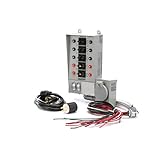
Reliance Controls Pro/Tran 10-Circuit Transfer Switch Kit (31410CRK / 310CRK)Manual transfer switch kitPortable generators up to 7,500 running watts with an L14-30 outlet5 years30 A, 125/250 V; generators up to 7,500 running watts
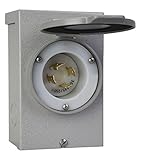
Reliance Controls PB30 Power Inlet Box (30 A, L14-30)Power inlet boxInterlock-kit and transfer-switch installs fed by a portable generator's L14-30 outlet5-year limited30 A, 125/250 V
WEN PC3025 30-Amp Generator Power Cord, 25 ft (L14-30P to L14-30R)Generator power cordConnecting an L14-30 generator to a house inlet from 20 feet or more away2 years30 A, 250 V
STA-BIL Storage Fuel Stabilizer, 16 oz (22207)Fuel stabilizerGasoline generators and stored fuel cans that sit for months between outages––
Southwire Surge Guard Generator Neutral-Ground Bonding Plug (44400)Neutral-ground bonding plugA floating-neutral generator run on cords, when an RV surge protector reports open ground or an EV charger refuses to start––

The picks

A CO alarm on a sealed 10-year battery with a digital ppm display. It keeps working through an outage, which is exactly when a generator puts carbon monoxide near the house.

Best for: Every level of the home and outside sleeping areas, before generator season

Power
Sealed 10-year lithium battery (not replaceable)
Sensor
Electrochemical CO
Display
Backlit CO ppm readout with peak-level memory
Alarm
85 dB at 10 ft
Standard
Meets UL 2034
Mounting
Wall or tabletop
Warranty
10-year limited
  • Needs nothing from the grid: an outage can't silence it
  • Shows CO in ppm and remembers the peak, so an exposure while you slept is visible in the morning
  • The battery lasts the alarm's whole life, nothing to forget to replace
  • CO only: it does not detect smoke
  • The whole unit is replaced when it signals end of life at 10 years
Read the full write-up →

One sealed-battery unit that detects smoke and carbon monoxide and says which one it found, for the spots where one device has to do both jobs.

Best for: Hallways outside bedrooms, where a smoke alarm and a CO alarm are both needed

Sensors
Photoelectric smoke + electrochemical CO
Power
Sealed 10-year battery (not replaceable)
Alerts
85 dB horn with voice alerts that name the hazard
Standards
Certified to UL 217 (10th ed.) and UL 2034 (5th ed.), Intertek/ETL
Warranty
10-year limited
  • Works through an outage: no mains power needed
  • Voice alerts tell smoke from CO, which changes what you do next
  • One device where two would otherwise be needed
  • Photoelectric smoke sensing only: Kidde itself recommends having both sensor types in the home
  • No CO ppm display, unlike the COBD10
  • Kidde recommends testing it weekly
Read the full write-up →

A 50-foot, 12-gauge outdoor cord with a lighted end, the reach a portable generator needs to sit 20 feet from the house and still get power to what you're running.

Best for: Running a fridge, freezer or space heater from a portable generator at a safe distance

Conductors
12/3: 12 AWG copper, 3 conductors
Jacket
SJTW: vinyl, weather-rated
Length
50 ft
Rating
15 A, 125 V, 1,875 W
Plug
NEMA 5-15P, lighted end
Listing
UL certified (Southwire)
  • 12 AWG holds voltage drop to about 2.5% at a full 15 A over 50 ft
  • The 20-foot CO distance plus the run to the appliance is exactly a 50-foot problem
  • Lighted end shows at a glance that the cord is live
  • Vinyl (PVC) jacket stiffens below freezing: for a cord that lives on the generator all winter, a rubber SOOW cord is tougher
  • 15 A limit: keep the total of everything plugged into it under 1,875 W
Read the full write-up →

A 30 A, 10-circuit manual transfer switch that mounts beside the panel, with the outdoor inlet box and generator cord in the box, the legal, no-backfeed way to run chosen circuits from a portable generator.

Best for: Portable generators up to 7,500 running watts with an L14-30 outlet

Rating
30 A, 125/250 V; generators up to 7,500 running watts
Circuits
10: up to 10 single-pole or 5 double-pole
Factory breakers
(1) 2-pole 20 A, (2) 1-pole 20 A, (6) 1-pole 15 A
In the kit
Switch with 18 in pre-wired conduit, outdoor inlet box (PB30), 10 ft 30 A generator cord
Generator outlet
NEMA L14-30 (4-prong 120/240 V twist-lock)
Metering
Two wattmeters for balancing the load
Listing
cULus listed to UL 1008
Warranty
5 years
  • Double-throw switches can't connect the generator and the utility at the same time: backfeeding is impossible in any position
  • Mounts beside the existing panel of any common brand; no panel replacement
  • Inlet box and cord included, so the hookup is one purchase
  • The included cord is 10 ft, half the 20 ft CPSC asks for; buy a 25 ft L14-30 cord to park the generator far enough out
  • Electrician install, and usually a permit: check with your local inspector
  • Circuits lose AFCI/GFCI protection on generator power unless matching breakers are fitted in the switch
  • Not for electric water heaters, dryers, ranges or central A/C
  • Reliance renumbered the kit 310CRK; Amazon lists the older 31410CRK part number with the same core contents and ratings
Read the full write-up →

A raintight metal box with a recessed L14-30 inlet that mounts on an outside wall, the place the generator cord plugs in, wired by an electrician to a transfer switch or an interlocked generator breaker.

Best for: Interlock-kit and transfer-switch installs fed by a portable generator's L14-30 outlet

Rating
30 A, 125/250 V
Inlet
NEMA L14-30 flanged inlet: takes the L14-30 connector end of a 4-wire generator cord
Enclosure
NEMA 3R raintight, metal (PB series), spring-loaded self-closing cover
Wiring
Copper only, #10 AWG minimum to #8 AWG maximum; four ½ in / ¾ in knockout combinations
Size
4 × 6 × 3.75 in (W × H × D)
Listing
cULus listed
Warranty
5-year limited
  • Power always arrives through the cord's shrouded female connector, so no exposed pin is ever live, the reason an inlet box beats any cord-to-panel shortcut
  • Reliance rates it for any brand of transfer switch or generator-ready panel, not only its own
  • The same inlet Reliance packs in its 31410CRK/310CRK kit, so the parts are known to work together
  • Self-closing cover keeps rain, debris and insects out of the inlet between outages
  • Electrician install, usually under a permit: Reliance's instructions require a qualified electrician working to code
  • Only the connection point: Reliance states it must be used with a transfer switch when powering a building (or a listed interlock kit, where the inspector accepts one)
  • No cord in the box, and the cord has to be long enough to keep the generator 20 ft from the house
  • 30 A ceiling: a generator with a 50 A outlet needs a 50 A inlet such as Reliance's PB50
Read the full write-up →

A 25-foot, 10-gauge, 4-wire twist-lock cord from the generator's L14-30 outlet to an inlet box or transfer switch, long enough to park the generator the 20 feet from the house CPSC asks for, which a 10-foot kit cord is not.

Best for: Connecting an L14-30 generator to a house inlet from 20 feet or more away

Conductors
10/4: 10 AWG, 4 wires
Jacket
SJTW: vinyl thermoplastic, outdoor-rated
Length
25 ft (PC3040: 40 ft, same construction)
Rating
30 A, 250 V
Ends
NEMA L14-30P plug to L14-30R connector, locking
Warranty
2 years
  • 25 ft clears the 20-foot CO distance with slack for routing; the 40 ft PC3040 leaves room to park around a corner or downwind
  • 10 AWG drops about 1.9 V (under 1%) at a full 30 A on a 240 V load over 25 ft, about 1.2% at 40 ft
  • Twist-lock ends at both connections can't be tugged loose
  • WEN says it fits any L14-30R generator outlet, not just WEN's
  • WEN's product page states no UL, ETL or CSA listing for the cord
  • Vinyl SJTW, not rubber: WEN says it stays flexible in the cold, but a rubber cord is tougher if it lives outside all winter
  • Only for generator-to-inlet use: the inlet must feed a transfer switch or interlock; never adapt a cord to backfeed through a wall outlet
Read the full write-up →

A gasoline stabilizer added to fresh fuel, so the generator's tank and the cans beside it still start the engine when the outage comes, stale fuel being the most common reason a portable generator won't.

Best for: Gasoline generators and stored fuel cans that sit for months between outages

Treat ratio
1 oz per 2.5 gal of gasoline; this 16 oz bottle treats 40 gal
Storage claim
Keeps gasoline fresh up to 24 months (manufacturer's claim)
Fuels
Ethanol and non-ethanol gasoline, including gas/oil 2-stroke mixes
Directions
Fresh fuel only; run the engine 5 minutes to carry treated fuel through the system
Bottle shelf life
2 years after opening, tightly capped
  • Targets the gum and varnish from stale gasoline that block a small-engine carburetor
  • One bottle treats 40 gallons, eight 5-gallon cans
  • Works in the ethanol-blended gasoline sold at most US pumps
  • Won't rescue fuel that has already gone stale: STA-BIL says it does not restore or improve old gasoline
  • STA-BIL's own FAQ says gasoline stored over 12 months tends to lose volatility whatever is added; rotate cans every 6-12 months anyway
  • Gasoline only; a propane or natural-gas generator needs none of this
Read the full write-up →

A three-prong plug with its neutral and ground joined inside: pushed into a spare 120 V outlet on a floating-neutral generator, it bonds the generator for standalone use on cords.

Best for: A floating-neutral generator run on cords, when an RV surge protector reports open ground or an EV charger refuses to start

Plug
NEMA 5-15P: 3-prong, for a 15 A, 120 V receptacle on the generator panel
Function
Joins neutral to ground while inserted: a temporary neutral-ground bond
For
Generators designed with a floating neutral only: check the generator's manual
Part number
Southwire 44400 (Surge Guard RV line)
  • Clears the "open ground" fault RV surge protectors show on a floating-neutral generator
  • No tools and no rewiring inside the generator: pull it out and the generator is floating again
  • A 5-15 plug also fits a 20 A (5-20) T-slot outlet
  • Never leave it in when the generator feeds a house through an interlock kit or a transfer switch that doesn't switch the neutral: the house's service bond is already in the circuit, and the plug adds a second one
  • Pointless on a generator that is already bonded: check the manual, or test neutral-to-frame continuity with a meter
  • Ties up one 120 V outlet while it's in
  • Southwire's catalog gives the function and fit only: no listing or warranty is stated
Read the full write-up →

Working out what you need before you buy? Read the generators & backup power guides.