
Do You Need a Panel Upgrade for a Heat Pump?
Updated 2026-08-16 · 7 min read
Gear this guide recommends
We earn a commission if you buy through links on this page, at no extra cost to you. It does not change what we recommend. See our affiliate disclosure. As an Amazon Associate I earn from qualifying purchases.
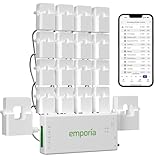
Whole-home energy monitor
Emporia Vue 3 Home Energy Monitor (16 circuit sensors)
Best for: Measuring hardwired and 240 V loads, or every circuit at once
Jump to a section▾
Heat pumps have a reputation for forcing service upgrades. The reputation is half-earned: the heat pump itself is usually a manageable load, and the electric resistance backup heat installed alongside it frequently is not.
Separating those two is what determines whether you need an upgrade.
How many amps does a heat pump draw?
A heat pump's outdoor unit draws a moderate amount:
| System | Typical circuit |
|---|---|
| Single-zone ductless mini split | 15–20 A, 240 V |
| Multi-zone ductless | 20–30 A, 240 V |
| Central heat pump, 2–3 ton | 20–35 A, 240 V |
| Central heat pump, 4–5 ton | 35–60 A, 240 V |
Always use the nameplate, which states a minimum circuit ampacity (MCA) and a maximum overcurrent protection (MOCP). Both are enforceable under the NEC, and the MOCP is often larger than you'd calculate from running current because motor inrush needs headroom. See what size breaker do I need.
Size the equipment itself first: an oversized heat pump costs more to install, runs worse, and draws more. Use the heat pump sizing calculator or the mini split sizing calculator.
Why does backup heat need so much power?
Air handlers for central heat pumps commonly include electric resistance strip heat for very cold weather and for defrost cycles. And strip heat is enormous:
| Strip heater | Amps at 240 V |
|---|---|
| 5 kW | ~21 A |
| 10 kW | ~42 A |
| 15 kW | ~62 A |
| 20 kW | ~83 A |
A 15 kW strip heater is 62 amps, well over half of a 100-amp service by itself, and it counts in the heating load of your calculation.
This is what forces service upgrades, not the compressor. When a contractor says a heat pump needs 200 amps, ask specifically how much backup heat is in the proposal.
What is NEC 220.83 load calculation?
The NEC's dwelling load calculation counts the larger of the heating load or the cooling load, not both. A house doesn't heat and cool at the same time.
That has real consequences:
- Replacing an AC condenser with a heat pump may add nothing to the cooling side, and the heating side only matters if it exceeds it.
- Replacing electric resistance heating with a heat pump can be a net reduction. Baseboard heat for a whole house is far more connected load than a heat pump plus modest backup.
- Adding a heat pump to a gas-heated home is where the addition is largest, because you're adding an electric heating load that didn't exist.
Run the calculation with your actual before-and-after configuration. See how to do a home electrical load calculation and the home electrical load calculator.
How do you avoid a panel upgrade for a heat pump?
1. Reduce or eliminate strip heat
The highest-leverage change available.
Cold-climate heat pumps maintain useful capacity at low outdoor temperatures, which reduces how much backup is needed, sometimes to a small heater for defrost only. Specifying a smaller strip heater, where the design supports it, can cut tens of amps out of the calculation.
Ask the HVAC contractor to justify the backup size against the design temperature rather than defaulting to the largest heater the air handler accepts. Oversized strip heat is common because it costs the contractor almost nothing and eliminates callbacks.
2. Dual fuel
Keep the existing gas furnace as backup instead of installing strip heat. A control setup runs the heat pump most of the season and switches to the furnace below a balance point.
The electrical load is then just the compressor and the blower, no strip heat at all. This is often the cheapest path in a home that already has a working furnace.
3. Ductless instead of ducted
Ductless mini splits generally have no electric backup heat and much smaller circuits. For a home without ducts, or for zoned additions, this sidesteps the problem entirely.
4. Right-size the equipment
Oversized systems draw more, cost more, and short-cycle. A Manual J-style load calculation for the house (separate from the electrical load calculation) is what produces the correct capacity. Contractors who size by square footage alone routinely oversize.
Do you need a panel upgrade for a heat pump?
- The calculation exceeds the service even with backup heat minimized
- You're doing a whole-home electrification (heat pump, heat pump water heater, induction range, EV charger) where the cumulative addition is large
- The panel is full with no adjacent free pair for a double-pole breaker, and no subpanel option fits
- The panel is unsafe or obsolete for independent reasons: see signs your electrical panel is failing
That last one is worth checking early, because if the panel is being replaced anyway, sizing the service correctly at the same time is far cheaper than a second project.
Questions to ask the HVAC contractor
- What's the MCA and MOCP on the proposed outdoor unit and air handler?
- How much strip heat is included, and what design temperature justifies it?
- Is a cold-climate model an option that would reduce the backup requirement?
- Is dual fuel viable with the existing furnace?
- Was the capacity from a room-by-room load calculation, or from square footage?
Then run the electrical numbers yourself before accepting that a service upgrade is required.
Where to go next
More in our electrical panel guides.
Frequently asked questions
Ask AI about this
Open an AI assistant with a question grounded in this page.