
200-Amp vs 400-Amp Service: Do You Need the Bigger One?
Updated 2026-08-15 · 6 min read
Gear this guide recommends
We earn a commission if you buy through links on this page, at no extra cost to you. It does not change what we recommend. See our affiliate disclosure. As an Amazon Associate I earn from qualifying purchases.
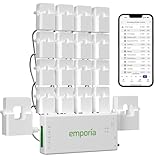
Whole-home energy monitor
Emporia Vue 3 Home Energy Monitor (16 circuit sensors)
Best for: Measuring hardwired and 240 V loads, or every circuit at once
Load management (EVEMS)
RVE DCC-10 (Thermolec)
Best for: Adding 240 V charging when the load calculation says no
Jump to a section▾
Upgrading 100 to 200 amps is routine work most electricians do weekly. Upgrading 200 to 400 is a different class of project, and the jump in cost and complexity is much larger than the jump in numbers suggests.
What does 200 amps actually support?
A 200-amp service comfortably handles a typical fully electric single-family home:
| Load | Approximate demand |
|---|---|
| Central heat pump | 3–10 kW |
| Heat pump water heater | 1.5–4.5 kW |
| Induction range | 8–12 kW |
| Electric dryer | 5 kW |
| Level 2 EV charger (40 A) | 12 kW counted at 125% |
| Lighting, receptacles, small appliances | 10–12 kW before demand factors |
Run through the NEC's demand factors (first 10 kVA at 100%, remainder at 40%, plus the larger of heating or cooling) and a home like that typically lands well under 200 amps. See how to do a home electrical load calculation.
The load that most often breaks this is electric resistance backup heat. A 15 kW strip heater is 62 amps on its own, and it's counted in the heating figure. Homes with heat pumps and large electric backup are where 200 amps starts to look tight.
What does a 400-amp service involve?
Not simply "a bigger panel".
Usually two 200-amp panels. 400-amp residential panels exist but are less common. The typical arrangement is a 400-amp meter or meter-main feeding two 200-amp panels, which is easier to source, easier to service, and often lets you put one panel near the loads it serves.
Much heavier conductors. Conductor size scales steeply. The service-entrance cable, the raceway, and the terminations all get substantially larger and more expensive.
Possible utility-side work. The transformer feeding your home was sized for the neighborhood. A 400-amp residential service sometimes requires the utility to upgrade equipment, which is their timeline and occasionally their charge.
More grounding. A larger service means a larger grounding electrode conductor, and the grounding electrode system gets reviewed against current requirements.
The result: the incremental cost from 200 to 400 is typically much larger than the cost from 100 to 200, and the timeline is longer because of the utility component.
The four cases that justify it
1. The calculation genuinely exceeds 200 amps
The only argument that always holds. Run the calculation with your real and planned loads. If it lands above 200 amps, that's the answer.
2. Two EVs charging simultaneously at high amperage
Two 48-amp chargers counted at 125% is 28.8 kW of continuous load, 120 amps before anything else in the house. That's a genuine driver.
But check the alternative first: load management across both chargers, or charging at reduced amperage, frequently keeps this inside a 200-amp service. Most households don't need both cars at maximum simultaneously overnight. See panel upgrades for EV charging.
3. An ADU, workshop, or second dwelling on the same service
A separate living unit brings its own full load (heating, cooking, water heating) and adds it to yours. This is a legitimate case, and it's also where two 200-amp panels are naturally convenient: one per unit.
4. Large square footage with electric heat
General lighting load is 3 VA per square foot, so a very large home starts high before any appliances. Add electric resistance heating and the total climbs quickly.
The cases that don't justify it
"I want margin." Margin is what the demand factors already provide. A calculation that lands at 150 amps on a 200-amp service already has real headroom.
"I might add things later." Check what "later" costs. If the future load is one EV charger, load management handles it. If it's a heat pump, run the calculation with the heat pump included now; you may still fit.
"400 sounds more future-proof." It costs nothing per month to have unused capacity, but a great deal once to install it. The question is whether that one-time cost buys something you'll use.
"The electrician suggested it." Ask to see the calculation. This is exactly the scenario where a calculation is worth insisting on.
The middle options
Before jumping to 400, three things frequently solve the same problem:
- Load management. Devices that monitor total service current and throttle large loads when the house is busy. The NEC permits managed loads to be counted differently in the calculation, which is precisely what lets big loads fit modest services.
- Charging at lower amperage. A 32-amp charge still adds 200+ miles overnight for most EVs. Halving your charger's current halves its contribution to the calculation.
- A subpanel, not more service. If the constraint is breaker positions rather than amps, a subpanel is a fraction of the cost. These are separate limits. See service upgrade vs panel replacement.
Where to go next
- 320 amp meter base
- Electrical panel sizes explained
- How to do a home electrical load calculation
- Panel upgrade for a heat pump
- Run the numbers: home electrical load calculator
More in our electrical panel guides.
Frequently asked questions
Ask AI about this
Open an AI assistant with a question grounded in this page.