
Breaker Won't Reset? How to Reset a Tripped Breaker Properly
Updated 2026-08-16 · 5 min read
Gear this guide recommends
We earn a commission if you buy through links on this page, at no extra cost to you. It does not change what we recommend. See our affiliate disclosure. As an Amazon Associate I earn from qualifying purchases.
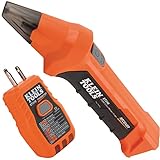
Circuit breaker finder
Klein Tools ET310
Best for: Labeling a panel without two people and a lot of shouting
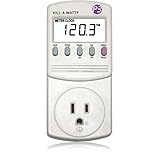
Plug-in power meter
P3 International Kill A Watt P4400
Best for: Measuring what one plug-in appliance really uses
Jump to a section▾
Resetting a breaker is one of the few electrical tasks that is genuinely a homeowner job. It just has one step that everyone skips.
What the handle is telling you
| Handle position | What it means | What to do |
|---|---|---|
| Fully ON | Not tripped | Look elsewhere: a GFCI, a switch, or an open neutral |
| Middle, between ON and OFF | Tripped | Push fully to OFF, then to ON |
| Fully OFF | Switched off, or already reset partway | Push to ON |
| Springs straight back to middle | Fault still present | Stop. Unplug everything on the circuit and retry once |
| Won't move, or feels loose | Failed breaker | Electrician |
The single most common failed reset is not pushing the handle all the way to OFF first. A tripped breaker rests in a middle detent, and moving it directly toward ON from there does not re-engage the mechanism.
The correct motion
- Push the handle firmly all the way to OFF. Past the middle position it's sitting in. You'll usually feel or hear it re-latch.
- Push it back to ON.
That's it. The reason resets "fail" so often is that a tripped breaker rests between ON and OFF, and moving it straight to ON from there doesn't re-engage the internal latch. It has to travel to full OFF first.
Push with intent. These aren't delicate switches.
Finding the tripped one
The handle offset can be subtle. Three ways to spot it:
Look. A tripped handle sits out of line with its neighbors.
Feel. Run a finger along the row. The tripped one feels loose or springy compared to the firm ones.
Check indicators. GFCI and AFCI breakers typically show a small colored flag or window when they've tripped, which distinguishes their trip from a plain overcurrent trip.
If nothing looks tripped but a circuit is dead, check for a tripped GFCI receptacle elsewhere on the circuit: often in a bathroom, garage, or outdoors, sometimes rooms away. See why does my GFCI keep tripping.
Before you reset
Ten seconds that will save you doing this again:
- Note what was running. Space heater plus hair dryer on one circuit? That's an overload, and it will repeat.
- Reduce the load. Unplug something before resetting.
- Look for an obvious cause: a damaged cord, a scorched plug, a tool that was running when it went.
When not to reset
Three situations where resetting is the wrong move.
1. It trips again immediately
An instant re-trip means a short circuit or a ground fault: a genuine fault present right now, not an overload. The magnetic element is firing in milliseconds.
Repeated resetting into a fault stresses the breaker and the conductors. Stop, unplug everything on the circuit, and try once more. If it still trips with nothing connected, the fault is in the wiring: that's an electrician call. See why does my breaker keep tripping.
2. Anything smells, feels hot, or looks scorched
A burning or hot-plastic smell, warmth through the panel cover, discoloration around a breaker, or a buzzing or crackling sound all mean stop. Don't reset. Call an electrician.
These are the signals that precede panel fires. See signs your electrical panel is failing.
3. It has tripped several times this week
A breaker doing its job occasionally is fine. One tripping regularly is reporting an unresolved condition: a genuinely overloaded circuit, a fault, or a breaker that has weakened and now trips below its rating.
Resetting it is treating the alarm rather than the fire.
When should you not reset a breaker?
Never fit a larger breaker to stop the tripping. The breaker is sized to protect the wire, and the wire didn't get bigger. Oversizing removes the protection and leaves the hazard: it's the single most dangerous DIY electrical mistake. See what size breaker do I need.
Never tape, wedge, or otherwise hold a breaker on. Same outcome, more direct.
Don't remove the panel's inner cover to investigate. The main lugs stay energized with the main breaker off.
After a successful reset
If the circuit stays on, work out what caused it so it doesn't repeat:
- Overload? Move a load to a different circuit. Knowing which outlets share a circuit makes this obvious, which is what an accurate directory is for. See how to label an electrical panel.
- One appliance? Suspect that appliance, particularly if it's older or its cord is damaged.
- Consistently short of circuits? That's an argument for adding one. See can I add a breaker to my panel.
Where to go next
- Why does my breaker keep tripping
- How many outlets on a 20-amp circuit
- Outlet not working: troubleshooting
- Check for overload: home electrical load calculator
More in our electrical panel guides.
Frequently asked questions
Ask AI about this
Open an AI assistant with a question grounded in this page.