
Heat Pump vs Electric Resistance Heat: Which Costs Less?
Updated 2026-08-16 · 9 min read
Gear this guide recommends
We earn a commission if you buy through links on this page, at no extra cost to you. It does not change what we recommend. See our affiliate disclosure. As an Amazon Associate I earn from qualifying purchases.
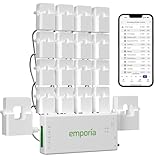
Whole-home energy monitor
Emporia Vue 3 Home Energy Monitor (16 circuit sensors)
Best for: Measuring hardwired and 240 V loads, or every circuit at once
Jump to a section▾
The difference between a heat pump and electric resistance heat comes down to one idea: a heat pump moves heat, while resistance heating creates it.
Resistance heat (electric baseboards, an electric furnace, or a wall heater) turns electricity directly into warmth and is essentially 100% efficient, but it can never give you more heat than the energy you pay for. A heat pump pulls existing heat out of the outside air and delivers 2 to 4 units of heat for every unit of electricity. That single difference is why a heat pump can cut your electric heating cost roughly in half.
Here's the short version. Resistance heat has a COP of 1.0: one watt in, one watt of heat out. A modern heat pump runs at a seasonal COP of about 2.5 to 4.0, so it produces the same warmth for 40–60% less electricity. It costs more to install and includes air conditioning for free, but the savings only hold if three things line up: a reasonably insulated home, a cold-climate model where winters are harsh, and correct sizing. Resistance heat still makes sense in a few specific cases: small spaces, rarely used rooms, and homes where the upfront cost can't be justified.
Heat pump vs electric resistance at a glance
| Criteria | Electric resistance (baseboard / furnace) | Heat pump (cold-climate) |
|---|---|---|
| How it works | Converts electricity directly to heat | Moves heat from outdoor air indoors |
| Efficiency (COP) | 1.0 (100% at the appliance) | 2.5–4.0 seasonal |
| Electricity to heat | 100% (baseline) | ~30–50% of resistance |
| Cooling included | No (needs a separate AC) | Yes (reverses in summer) |
| Install cost | Low ($1,500–$5,000 whole home) | Higher ($4,500–$15,000+) |
| Efficiency ratings | n/a (always 1.0) | SEER2 / HSPF2 (higher = better) |
| Cold-weather output | Constant, never drops | Drops as it gets colder; backup helps |
| Lifespan | 20–40 years, near-zero maintenance | 15–20 years, light annual service |
| Rebates | Rarely | May be available; check current programs |
| Best for | Small or rarely used spaces, low budget | Most homes as primary heat |
Understanding the two systems
Electric resistance: heat by brute force
A resistance heater passes current through a high-resistance element. The element heats up, and that warmth spreads into the room, by natural convection for baseboards, or by a blower in an electric furnace. There's no compressor, no refrigerant, and almost nothing to break.
Strengths:
- Cheapest possible equipment and installation
- Effectively zero maintenance; 20–40 year lifespan
- Silent (baseboards) and perfectly zonable: every room can have its own thermostat
- No outdoor unit, no refrigerant, no moving parts to fail
Weaknesses:
- COP fixed at 1.0: every watt of heat costs a full watt of electricity
- No cooling: you need a separate AC for summer
- Highest running cost of any electric heating method
- Rarely qualifies for efficiency rebates
Heat pump: heat by moving it
A heat pump runs a refrigeration cycle in reverse. Refrigerant absorbs heat from the outdoor air (yes, even cold air holds usable heat) and a compressor concentrates it, then releases it indoors. In summer the cycle flips and the same unit becomes an air conditioner.
Strengths:
- Seasonal COP of 2.5–4.0: 2.5 to 4 units of heat per unit of electricity
- Air conditioning included at no extra equipment cost
- 40–60% lower heating cost than resistance heat
- May qualify for efficiency rebates; check current programs in your area
Weaknesses:
- Higher upfront cost ($4,500–$15,000+ before any rebates)
- Outdoor compressor (modern inverter units run quietly)
- Shorter lifespan (15–20 years) and needs light annual service
- Must be sized correctly and matched to your climate
The efficiency story: COP, SEER2, and HSPF2
The single number that explains everything is COP: coefficient of performance, the heat delivered per unit of electricity consumed.
| System | Typical seasonal COP | Relative efficiency |
|---|---|---|
| Electric resistance | 1.0 | Baseline |
| Standard (ducted/ductless) heat pump | 2.0–2.8 | 2–2.8× more efficient |
| Cold-climate heat pump | 2.5–3.5 | 2.5–3.5× more efficient |
| Ground-source (geothermal) heat pump | 3.5–4.8 | 3.5–4.8× more efficient |
When you shop for a heat pump in the US, you'll see two ratings on the label:
- HSPF2 measures heating efficiency over a season: higher is better. It rolls the COP across a range of outdoor temperatures into one number.
- SEER2 measures cooling efficiency the same way for summer.
You don't need to memorize the math. The takeaway: a higher HSPF2 means more heat per kWh, and a cold-climate-rated unit holds its efficiency further into the cold. Resistance heat has no rating because it's always, unavoidably, a COP of 1.0.
What it actually costs to run
The running-cost gap is the whole reason to switch. Consider an illustrative home that needs 12,000 kWh of heat per winter, the kind of figure a moderately sized, reasonably insulated house in a cold region might use. We'll price electricity at an illustrative 16 cents/kWh (US rates vary widely by state; check your local electricity rates for a real figure).
| System | Electricity used for heat | Illustrative annual heating cost |
|---|---|---|
| Electric resistance (COP 1.0) | 12,000 kWh | ~$1,920 |
| Standard heat pump (COP 2.5) | 4,800 kWh | ~$770 |
| Cold-climate heat pump (COP 3.0) | 4,000 kWh | ~$640 |
In this example the heat pump saves roughly $1,150–$1,280 per year on heating alone, and that's before counting the summer AC you'd otherwise buy and run separately. The dollar figures shift with your climate, your rate, and your home, but the ratio holds: a heat pump consistently does the same job for a third to half the electricity. To put real numbers against your own rate and usage, try the heat pump payback calculator.
Rule of thumb: divide a resistance-heating estimate by the heat pump's seasonal COP to approximate the heat pump cost. COP 3.0 means roughly one-third the heating bill.
Cold-climate performance: the real question
The old knock on heat pumps, "they don't work when it's really cold," described equipment from decades ago. It's outdated.
A heat pump's efficiency does fall as the outdoor temperature drops, because there's less heat in the air to move. But cold-climate heat pumps (sometimes labeled hyper-heat or extended-capacity) are engineered to keep delivering usable heat down to about 0–5°F, and many keep running below that with reduced output. They use variable-speed inverter compressors and enhanced refrigerant circuits to hold output where older units gave up.
Two practical points:
- Backup heat is normal, not a failure. Most cold-climate installs keep electric resistance backup (the existing baseboards or a strip heater in the air handler) for the handful of days each winter when it's coldest. The heat pump carries the season; the backup covers the extremes.
- Match the unit to your climate. A standard heat pump loses output and leans on expensive backup heat much sooner. In a cold region, a cold-climate model is what preserves the savings. Picking the right one is the core of our how to choose a heat pump guide.
When electric resistance heat still wins
Switching isn't automatic. Resistance heat remains the rational choice in several cases:
- Small or rarely used spaces: a guest room, a finished garage, a workshop. The heat pump's upfront cost never pays back on a space you barely heat.
- Backup and supplemental heat: keeping baseboards as the cold-snap backup to a heat pump is smart, not wasteful.
- Tight budget with no rebate access: if you can't fund the install or finance it, resistance heat keeps you warm now for very little upfront.
- A poorly insulated home: if the house leaks heat (thin attic insulation, failing windows), insulate first. A heat pump in a leaky home loses much of its advantage, and so does any heating system.
- A home you'll sell soon: the payback window may be too short to recover the install cost, though the added AC and efficiency can still help resale.
In most other cases (a primary residence you heat all winter) the math favors the heat pump, often decisively.
Which one is right for you?
Walk three questions:
- How much do you heat? A space you run all winter rewards efficiency → heat pump. A room you heat occasionally → resistance is fine.
- How cold does it get? Mild winters → almost any heat pump pays off. Harsh winters → a cold-climate heat pump with resistance backup.
- Is the house reasonably tight? Decent insulation → the heat pump's savings show up fast. Leaky house → insulate first, then decide.
Most homeowners heating a primary residence end up on a heat pump: the running-cost savings plus free air conditioning outweigh the higher install. Resistance heat earns its place in small spaces, as backup, and where the budget rules out anything more.
How to estimate your own savings
You can get a solid ballpark for your own home in four steps:
- Find your annual resistance-heating electricity. Compare your winter bills to your summer baseline; the seasonal jump is roughly your heating energy. Multiply those kWh by your rate to get what resistance heat (baseboards or an electric furnace) costs you.
- Pick a seasonal COP. Use about 3 for a mild-to-mixed climate, or 2–2.5 for a genuinely cold one with a cold-climate unit. Divide your heating energy by that COP. That's roughly what the heat pump would use.
- Take the difference. Resistance cost minus heat pump cost is your estimated annual saving.
- Divide installed cost by the saving for a rough payback in years. Subtract any rebates from the installed cost first.
A quick worked example: if your baseboards use 10,000 kWh of heating energy a year at $0.16/kWh, that's $1,600. At a seasonal COP of 3, the heat pump uses about 3,300 kWh, or ~$530, a saving near $1,070/year. On a $9,000 installed mini-split (after rebates), that's roughly an 8-year payback, and pure savings after that. The heat pump payback calculator runs this for your own rate and home.
The bottom line
Electric resistance heat is cheap to install, silent, and nearly maintenance-free, but it's the most expensive electric heat to run, because it can never beat a COP of 1.0. A heat pump costs more upfront and adds light maintenance, but it moves heat instead of making it, runs at a COP of 2.5–4.0, and cuts heating cost by 40–60% while throwing in summer cooling. Match the equipment to your climate, insulate the house first, and for most primary homes the heat pump wins on total cost.
Want to see the numbers for your own rate and home? Start with your local electricity rates, then explore the rest of our home-energy guides or the full guide library.
Where to go next
Frequently asked questions
Ask AI about this
Open an AI assistant with a question grounded in this page.