
EV Charging Without a Garage: Driveway and Street Options
Updated 2026-08-16 · 7 min read
Gear this guide recommends
We earn a commission if you buy through links on this page, at no extra cost to you. It does not change what we recommend. See our affiliate disclosure. As an Amazon Associate I earn from qualifying purchases.
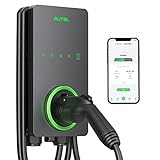
Smart charger
Autel MaxiCharger AC Lite Home 50A
Best for: Maximum output per dollar in a hardwired smart charger
Jump to a section▾
"No garage" covers two very different situations. If you have a driveway or carport, you have a solvable installation problem. If you have street parking only, you have a routine problem that no installation solves. Sort yourself into one before reading further.
How do you charge an EV without a garage?
| Option | Practical? |
|---|---|
| Level 1 from a window or exterior outlet | Often enough: 3–5 mi/hr, ~40 mi overnight |
| Workplace charging | Excellent when available |
| Public Level 2 near home | Works if there's one within walking distance |
| DC fast charging weekly | Expensive, and harder on the battery long term |
| Curbside / pole-mounted charging | Growing, but very location-dependent |
| Cord across a sidewalk | No: a trip hazard and usually prohibited |
| Charging at a friend's or family's | Fine, and offer to pay the electricity |
For most drivers the first row is the surprise: a standard outlet covers roughly 40 miles overnight, which is more than the average US daily drive. The lack of a garage is a smaller obstacle than it appears.
If you have a driveway or carport
This is a normal outdoor charger installation. The electrical design is identical to a garage install (a dedicated 240V circuit sized at 125% of the continuous load) with four things that change.
1. Wet-location equipment. The charger must be rated for outdoor wet locations, and you should check its operating temperature range against your winter. Some units specify a minimum temperature that a northern night exceeds.
2. Hardwired is usually better. A plug-in charger outdoors means an exposed NEMA 14-50 receptacle needing a weatherproof in-use cover, and under recent NEC editions, generally GFCI protection for 240V dwelling receptacles. Hardwiring removes the receptacle entirely. See NEMA 14-50 vs hardwired.
3. Something to mount on. Options in rough order of cost:
- An exterior wall of the house: cheapest, if the parking is close enough
- A carport post, if it's substantial enough
- A dedicated pedestal or post, set in concrete, needed when parking is away from the building
4. Protection from vehicles. A charger in a driveway parking area is in the path of a car. A bollard is the standard answer, and inspectors commonly look for one where impact is plausible.
Full treatment in outdoor EV charger installation and mounting height and placement.
What does a driveway charger installation cost?
The charger is a small share. What moves the number:
- Distance from the panel: the dominant factor
- Whether the run crosses hardscape: cutting and patching a driveway is expensive; ask about boring underneath instead
- Trenching to a pedestal, plus restoration
- Larger conductors for voltage drop on long runs
- A pedestal and its concrete base
Estimate with the home charger install cost calculator, and see conduit and wire runs for why the path matters more than the distance.
One cheap tactic: mount the charger closer to the panel and buy a longer cable. A longer charging cable costs far less than a longer circuit. EV charger cable length covers how to measure the routed path.
What is it like using an outdoor EV charger?
- Never leave the connector on the ground. Water, grit and road salt get into the pins. Use the holster every time.
- Cold stiffens cable. A long cable that coils neatly in summer can be a fight in January; weigh that against reach.
- Watch for snow load and roof drip lines when picking a mounting spot.
- Shade beats sun. A charger baking in afternoon sun runs hot and can derate.
- Consider access control if the charger is reachable from the street: most units offer a lock, RFID, or app authorization. Smart vs standard EV chargers.
- Inspect the cable periodically for jacket damage: charging cable damage and safety.
Can you own an EV with street parking only?
There is no installation that solves this. Running a cable across a public sidewalk is a trip hazard and prohibited in most jurisdictions, and cable covers don't change that in most places. Some cities are piloting curbside and pole-mounted chargers, but coverage is thin and unpredictable.
So build a routine instead. The components:
Workplace charging: the single best substitute for home charging. Long dwell time, often low or no cost, and increasingly common as an employee amenity. If your employer doesn't have it, workplace EV charging covers making the case.
Public Level 2 at places you already go: grocery stores, gyms, libraries, retail. The trick is to charge during errands you'd run anyway rather than making charging a separate trip.
DC fast charging as a backstop: once a week or so rather than daily. Fast and convenient, but meaningfully more expensive. Public charging cost vs home quantifies the gap, and how to use a DC fast charger covers the session itself.
Opportunistic Level 1: at a friend's, a relative's, or anywhere you park for a long stretch with permission.
EV charging in an apartment covers assembling this routine in more detail; the mechanics are the same.
Habits that make no-home-charging workable
- Charge on a schedule, not on empty. Pick a weekly slot and defend it.
- Keep a buffer. Arriving home at 8% with no home charger is a bad position.
- Know two backup stations, not one.
- Stack charging with dwell time you're already spending.
- Precondition in winter so a cold pack doesn't make a fast-charge stop take twice as long: cold-weather EV charging.
- Watch your efficiency. Without cheap overnight charging, miles per kWh translates directly into money; see kWh and miles per kWh explained.
Be honest about the economics
Home charging is the main cost advantage of an EV. Without it, you're paying public rates, and the gap between an EV and an efficient gas car narrows considerably, though for most drivers it still favors the EV.
Run your own numbers: use the EV charging cost calculator with a public rate rather than a residential one, and compare with EV vs gas cost. If the answer is close, that's useful information before buying: not a reason to avoid an EV, but a reason to prioritize finding some form of regular low-cost charging.
The bottom line
With a driveway or carport, you have a standard outdoor install: wet-location equipment, hardwired, mounted on a wall or pedestal, protected from vehicles, on a circuit sized for the distance. With street parking only, no install helps: build a routine from workplace charging, public Level 2 during errands you already run, and occasional DC fast charging, and run the cost math with public rates before you buy.
A unit for the driveway case
If you fall on the driveway-or-carport side, the four requirements above point the same way: a wet-location unit, hardwired so there is no exposed receptacle to weatherproof. One that fits:
We earn a commission if you buy through links on this page, at no extra cost to you. It does not change what we recommend. See our affiliate disclosure. As an Amazon Associate I earn from qualifying purchases.
Smart charger
Autel MaxiCharger AC Lite Home 50A
A 12 kW hardwired smart unit with published dynamic load balancing, in J1772 and NACS versions.
Best for: Maximum output per dollar in a hardwired smart charger
- Max output
- 50 A / 12 kW, hardwired only
- Adjustable
- 6–50 A
- Connector
- J1772 or NACS versions
- Cable
- 25 ft
- Enclosure
- NEMA 4X, indoor/outdoor
- Smart
- Wi-Fi + Bluetooth, Autel Charge app, scheduling, monitoring
- Load management
- Dynamic load balancing (published for the 50 A tier)
- Listing
- CSA certified, Energy Star
- Warranty
- 3 years
- Full 12 kW output and 6–50 A adjustability at an aggressive price
- NEMA 4X enclosure, the best weather rating in the group
- Published dynamic load balancing at this tier
- Hardwired only in the 50 A version: the 40 A plug-in sibling is J1772-only
- Smaller US support footprint than the household names
More options in every size are in the Level 2 charger picks.
Estimate a driveway install with the home charger install cost calculator, price public charging with the EV charging cost calculator, or read outdoor EV charger installation.
Frequently asked questions
Ask AI about this
Open an AI assistant with a question grounded in this page.