
Multi-Wire Branch Circuit: How It Works, and the Mistake
Updated 2026-08-16 · 6 min read
Gear this guide recommends
We earn a commission if you buy through links on this page, at no extra cost to you. It does not change what we recommend. See our affiliate disclosure. As an Amazon Associate I earn from qualifying purchases.

Non-contact voltage tester
Klein Tools NCVT-3P
Best for: Confirming a circuit is dead before you open a device or box
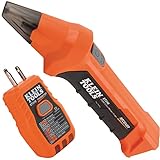
Circuit breaker finder
Klein Tools ET310
Best for: Labeling a panel without two people and a lot of shouting
Jump to a section▾
A multi-wire branch circuit (MWBC) runs two 120-volt circuits that share a single neutral. It's an efficient arrangement with one specific failure mode that makes it worth understanding.
How does a multi-wire branch circuit work?
A normal 120-volt circuit uses three conductors: an energized conductor, a neutral, and an equipment ground.
An MWBC uses four for two circuits: two energized conductors, one shared neutral, one ground. The saving is one conductor per pair of circuits, plus a smaller cable and less labor.
The trick is which bus bars the two energized conductors come from.
Why the shared neutral carries less, not more
Your service is split-phase: the two bus bars are 180 degrees out of phase with each other.
Take one energized conductor from bus A and the other from bus B, and their return currents on the shared neutral partially cancel. The neutral carries the difference between the two loads:
| Circuit A | Circuit B | Neutral current |
|---|---|---|
| 10 A | 10 A | 0 A |
| 15 A | 5 A | 10 A |
| 12 A | 0 A | 12 A |
| 20 A | 20 A | 0 A |
The worst case is one circuit fully loaded and the other idle, which puts that circuit's full current on the neutral, and the neutral is sized for one circuit, so that's fine.
The dangerous error
Take both energized conductors from the same bus bar and the currents no longer cancel. The neutral carries the sum:
| Circuit A | Circuit B | Neutral current |
|---|---|---|
| 15 A | 15 A | 30 A |
| 20 A | 20 A | 40 A |
Two 20-amp breakers can put 40 amps on a 12 AWG neutral rated for 20. And the neutral has no overcurrent protection of its own: neither breaker sees anything unusual, because each is carrying only its own 20 amps.
The neutral overheats inside the wall with no indication at the panel. This is the specific hazard of MWBCs done wrong, and it's why the arrangement demands care.
Why are handle ties required?
Current code requires a means of simultaneous disconnect for all ungrounded conductors of a multi-wire branch circuit: a two-pole breaker or listed handle ties.
The reason is the shared neutral. Turn off circuit A, start working, and circuit B is still energized and still returning current on the neutral you're about to touch. Disconnecting a neutral that's carrying current can also expose you to voltage through the connected load.
Older installations frequently have two independent single-pole breakers with no tie. That was permitted under earlier code editions but isn't for new work, and it's a common thing to correct during a panel replacement.
Note: a nail or a screw through two breaker handles is not a listed handle tie.
How to spot one
At the panel: two single-pole breakers joined by a handle tie, in adjacent positions. If you see that and it isn't a 240-volt double-pole breaker, it's very likely an MWBC.
In a box: a cable with two energized conductors (typically black and red), one white neutral, and one ground: three-conductor cable rather than two.
Behavior: turning off one breaker leaves some devices in the area working, and the two circuits' outlets are interleaved in a way that seems arbitrary.
If you find handle-tied singles while mapping your panel, note it on the directory. See how to label an electrical panel.
Where you'll find them
Kitchen small-appliance circuits are the classic case: two required 20-amp circuits serving the countertop receptacles, often run as one MWBC.
Also common in older homes generally, where the conductor saving mattered more, and in long runs to remote parts of a house.
The other risks
An open neutral is worse on an MWBC. If the shared neutral opens upstream, the two circuits end up in series across 240 volts. The voltage divides according to the loads: a lightly loaded circuit can see well above 120 volts. This destroys electronics, and it's the reason a loose neutral connection on an MWBC is a genuine hazard rather than an inconvenience.
Nuisance AFCI/GFCI issues. Providing arc-fault or ground-fault protection on an MWBC requires devices designed for it: two-pole AFCI or GFCI breakers. A standard single-pole GFCI on one leg of an MWBC will trip constantly, because current returning on the shared neutral isn't the current it sent out. See why does my GFCI keep tripping.
If you have one
Nothing needs to change simply because an MWBC exists: they're permitted and they work.
Worth verifying, next time an electrician is in the panel:
- The two energized conductors are on opposite bus bars
- There's a handle tie or a two-pole breaker
- The neutral connections are tight, and each neutral lands individually on the bar. See double-tapped breakers, which covers double-tapped neutrals too
Code reference
The requirements behind this guide, for looking up in your adopted edition:
- NEC 210.4(B): a multi-wire branch circuit needs a means to simultaneously disconnect all ungrounded conductors
- NEC 210.4(D): grouping of the conductors
Code editions and local amendments vary by jurisdiction. Confirm the adopted edition with your AHJ before relying on any specific article.
Where to go next
- Single-pole vs double-pole breakers
- Grounding vs bonding
- Why does my breaker keep tripping
- Run the numbers: home electrical load calculator
More in our electrical panel guides.
Frequently asked questions
Ask AI about this
Open an AI assistant with a question grounded in this page.