
How Long Does a Water Heater Last? Lifespan & Signs to Replace
Updated 2026-08-16 · 6 min read
Gear this guide recommends
We earn a commission if you buy through links on this page, at no extra cost to you. It does not change what we recommend. See our affiliate disclosure. As an Amazon Associate I earn from qualifying purchases.
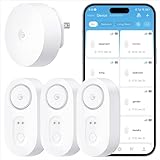
Wi-Fi gateway + battery sensors
Govee GoveeLife Water Leak Detector 1s (H5044 gateway + H5059 sensors)
Best for: A first leak-alarm kit for the water heater, washing machine and under-sink spots in a house with 2.4 GHz Wi-Fi
Jump to a section▾
A water heater is easy to forget about, until it leaves you with a cold shower or a flooded floor. Knowing how long yours should last, and the signs it's nearing the end, lets you plan a replacement on your terms instead of in an emergency.
Average lifespan by type
| Water heater type | Typical lifespan |
|---|---|
| Conventional tank (gas or electric) | 8–12 years |
| Tankless (on-demand) | 15–20 years |
| Heat-pump water heater | 10–15 years |
These are averages. The single biggest variable is water hardness (minerals accelerate corrosion and sediment buildup), followed by maintenance and how heavily the heater is used. A well-maintained tank in soft water can outlast its rating, while a neglected one in hard water can fail early.
How old is my water heater?
Almost nobody knows, and it's the first thing worth establishing: the whole "repair or replace" decision hinges on it.
Manufacturers encode the build date in the serial number on the rating plate, usually in the first few characters as a month-and-year or week-and-year pair. The scheme differs by brand and sometimes by plant, so read it against that manufacturer's own serial decoder rather than assuming a common format. Some rating plates print the manufacture date outright.
If the plate is unreadable, the installation permit or the previous owner's paperwork usually dates it. Failing that, treat a heater you can't date as older than you'd like and plan accordingly.
Why does the anode rod decide how long a tank lasts?
Every conventional tank is steel with a glass lining, and that lining always has small imperfections. What actually keeps the tank alive is the sacrificial anode rod, a magnesium or aluminum rod that is more electrochemically reactive than steel, so it corrodes instead of the tank.
Once the anode is consumed, the tank starts corroding. That is the mechanism behind nearly every "the tank rusted through" failure, and it's the one thing a homeowner can actually control.
- Magnesium protects more aggressively but depletes faster, and in some water chemistry it worsens a sulfur smell.
- Aluminum lasts longer and is the common choice in hard water.
- Powered (impressed-current) anodes don't deplete at all, and are a reasonable retrofit on a tank worth keeping.
Check it by removing the hex-head plug on top of the tank, or the combination anode built into the hot outlet on some models. Replace it when the core steel wire is exposed along much of its length, or the rod has wasted to roughly half its original diameter.
Does the warranty length tell you anything?
More than you'd expect. Manufacturers routinely sell 6-, 9- and 12-year versions of what is otherwise the same tank, and the longer-warranty models generally carry more anode mass (a larger rod, or a second one) along with better insulation and sometimes a heavier element.
So the warranty tier is a rough proxy for how long the tank is protected from corrosion. Paying up a tier is often the cheapest way to buy more anode, and it costs far less than the labor of an early replacement.
Does thermal expansion shorten a water heater's life?
Yes, and it's routinely missed. If a check valve, pressure-reducing valve or backflow preventer sits on your incoming water line, the plumbing is a closed system: heated water expands and has nowhere to go, so pressure spikes on every heating cycle.
The usual symptom is a T&P valve that weeps for no obvious reason. The stress also works against the tank and its fittings. The fix is a properly sized thermal expansion tank, pre-charged to match your incoming static water pressure. Plumbing codes require thermal expansion control on closed systems, so this is a code item, not an upgrade.
What fails on a tankless or heat pump unit?
They don't fail the same way a tank does, which is why their service lives are longer.
- Tankless. Scale on the heat exchanger is the main enemy: descale annually in hard water, and many units flag it themselves. Flow sensors and igniters are the other common parts. Crucially, a tankless unit's heat exchanger and control board are replaceable, so a fault is usually a repair rather than a replacement.
- Heat pump water heater. The compressor, fan and evaporator are the new failure points, plus condensate drainage. But the storage tank underneath is still glass-lined steel with an anode: every tank rule above still applies to it, and the air filter needs periodic cleaning.
What shortens a water heater's life
- Hard water. Minerals build sediment and corrode the tank faster.
- No maintenance. Skipping the annual flush lets sediment insulate and overheat the tank; a worn-out anode rod lets the tank itself corrode.
- High temperature. Running hotter than needed stresses the tank and components: 120°F is the sweet spot for safety, efficiency, and longevity.
- Constant heavy demand. A heater sized too small for the household runs harder and wears faster.
Signs it's time to replace
Watch for these, especially as the heater passes 8–10 years:
- Rusty or discolored hot water: internal corrosion.
- Not enough hot water, or it runs cold fast: sediment has cut usable capacity, or an element/burner is failing.
- Popping, rumbling, or banging: sediment boiling at the bottom of the tank.
- Leaks or dampness around the base: if it's the tank itself (not a fitting or valve), the tank has corroded through and must be replaced.
- Rising energy bills with no other cause: the heater is losing efficiency.
A leak from the tank is the clearest "replace now" signal: tanks can't be patched, and a full failure can dump 40+ gallons onto your floor.
Repair or replace?
A simple rule:
- Repair if the heater is under ~8 years old and the problem is a single replaceable part: thermostat, heating element, burner, or a valve.
- Replace if it's near or past its expected lifespan, the tank is leaking, or the repair would cost more than about half the price of a new unit.
An aging heater is also the natural moment to consider an upgrade: a tankless unit for longer life and no standby loss, or a heat-pump water heater for the lowest running cost. The water heater replacement cost calculator compares the installed cost of each type, and the electricity bill calculator shows how much water heating adds to your bill.
How to make yours last longer
- Flush the tank once a year to clear sediment. See how to flush a water heater.
- Replace the anode rod every 3–5 years (it corrodes so the tank doesn't).
- Set the thermostat to 120°F: hot enough, and easy on the tank.
- Soften hard water if that's your situation.
A little maintenance is cheap next to a new heater, and it turns "8–12 years" into the top end of the range, or beyond.
Where to go next
Frequently asked questions
Ask AI about this
Open an AI assistant with a question grounded in this page.